
Barreling in Bordeaux: history and technique


Barreling is one of the most defining stages in the life of a fine wine. In Bordeaux, it is not just a technical step, but part of a long historical continuity that has shaped the region’s identity and its wines.
At Château Latour-Monplaisir, this approach is applied with intention. Barreling is reserved exclusively for Astéria, our most exclusive cuvée produced only in vintages that reach the level required to express its full potential. It is a selective process, rooted both in tradition and in a precise, modern understanding of wine.
To fully understand what barreling represents today, it helps to look at where it comes from.
The origins of barreling: from transport to transformation
The use of barrels in winemaking dates back over two thousand years. While the Greeks and Romans primarily used clay amphorae to store and transport wine, it was the Celts who are credited with developing wooden barrels as we know them today.
The Romans quickly adopted this innovation after encountering it in Gaul (modern-day France). Barrels proved more practical than amphorae: they were stronger, easier to handle, and far better suited for long-distance transport.
This shift became particularly important in regions like Bordeaux, where wine was exported extensively.
The role of England in shaping Bordeaux barrel tradition
From the 12th century onwards, Bordeaux developed strong commercial ties with England, especially after the marriage of Eleanor of Aquitaine to Henry II.
English merchants became major buyers of Bordeaux wines. To facilitate trade, a standardized barrel size was introduced: the barrique bordelaise. This barrel held approximately 225 liters of wine.
Why 225 liters?
The answer is practical. A full 225-liter barrel weighs roughly 300 kilograms when filled. This made it manageable for transport by one or two men, whether rolling it onto ships or moving it in cellars. It also allowed for consistent taxation and trade measurements, which was crucial for large-scale export.
Over time, this volume became the reference standard in Bordeaux, and remains so today.
The Bordeaux barrel: a technical standard
The 225-liter Bordeaux barrel is now one of the most widely recognized formats in the wine world.
It is typically made from French oak, sourced from forests such as Tronçais, Allier, or Nevers. The wood is air-dried for several years before being shaped and toasted.
The size of the barrel is not arbitrary. It represents a balance:
Small enough to allow meaningful interaction between wine and wood
Large enough to avoid excessive oak influence
This ratio between volume and surface area is essential. It determines how much oxygen enters the wine and how the wood interacts with it over time.
From storage to ageing: the evolution of purpose
Originally, barrels were purely functional. They were used to store and transport wine.
However, over time, winemakers observed that wines aged in barrels developed differently. They became more stable, more complex, and more integrated. This observation transformed the role of the barrel. It was no longer just a container, but an active tool in winemaking.
In Bordeaux, this led to the development of ageing in barrel: a phase where the wine is intentionally aged in oak to refine its structure and expression.
What happens during barrel ageing?
Once the wine is transferred into barrel, a series of slow transformations begin.
Controlled oxygen exchange
Oak is naturally porous. It allows very small amounts of oxygen to enter the wine over time. This process, often referred to as micro-oxygenation, softens tannins and stabilizes the wine’s structure.
Structural refinement
Tannins, which can be firm in young wines, gradually polymerize. This makes the wine smoother, more cohesive, and more balanced on the palate.
Aromatic evolution
The wine develops beyond its primary fruit profile. It gains depth and complexity, with layers that evolve over time.
Interaction with wood
Depending on the barrel’s age and toast level, subtle aromatic compounds may be introduced. In a precise approach, these remain integrated, never dominant.
Modern Bordeaux: precision over power
In the past, some Bordeaux wines were marked by strong oak influence. Today, the approach has evolved.
The focus is now on balance and integration. Barrels are used to support the wine, not to shape it artificially.
This shift reflects a broader movement toward wines that are both structured and precise, capable of ageing while remaining approachable.
Astéria: a selective approach to barreling
At Château Latour-Monplaisir, barreling is not applied across all wines.
It is reserved exclusively for Astéria, our confidential cuvée produced in limited quantities and only in vintages that reveal its complexity.
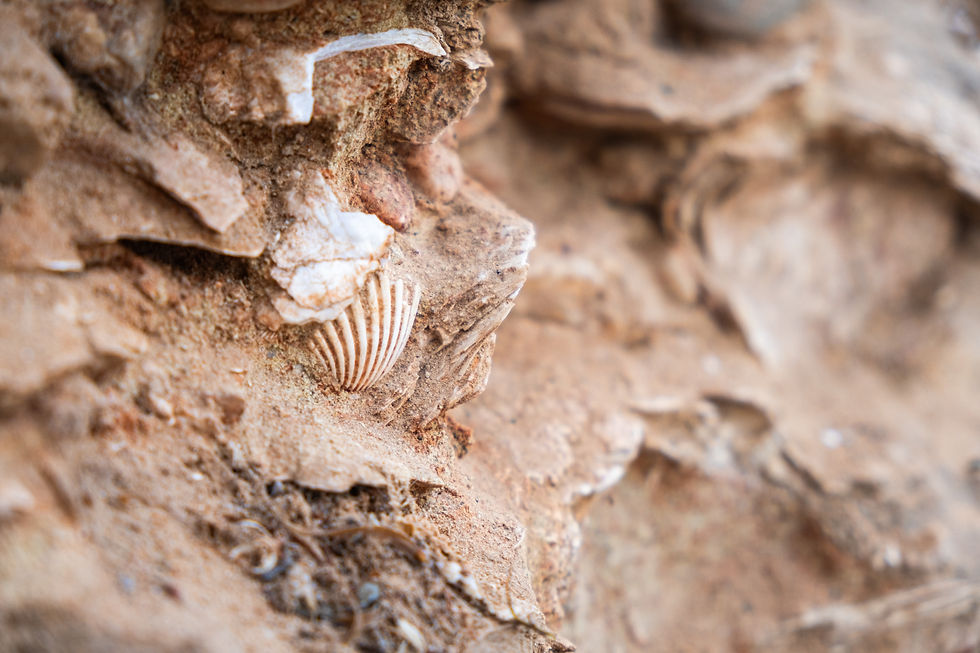
Astéria comes from a specific parcel (Monplaisir) where vines are rooted in a continuous slab of asteriated limestone, a rare geological formation shared with some of Saint-Émilion’s most renowned terroirs.
This foundation allows for slow, even ripening, giving the wine the structure and depth required for extended ageing.
Why Astéria requires barrel ageing
Astéria is made with time in mind from the outset. Its natural concentration, the finesse of its tannic structure, and the intensity of its aromatic profile give it the capacity to evolve gracefully.
Barrel ageing extends this trajectory. As the months pass, the wine settles into a more seamless expression. The fruit, the structure, and the freshness come together with greater coherence, revealing a texture that is both refined and harmonious. What begins as energy gradually unfolds into depth, with complexity.
A tailored ageing
There is no fixed formula for ageing Astéria. Each vintage is approached individually. The proportion of new barrels, the duration of ageing, and the evolution of the wine are all guided by regular tastings.
Ageing typically lasts between 15 and 30 months, depending on the structure of the vintage.
This flexibility ensures that the wine is released when it is ready, not when a schedule dictates.
A continuation of the work in the vineyard
At Château Latour-Monplaisir, winemaking is seen as a continuum. What happens in the cellar is an extension of what has been done in the vineyard.
Barreling fits naturally into this philosophy. It is not about transformation, but about refinement. Each decision is made with restraint, aiming to preserve the identity of the wine while allowing it to evolve.
A quieter, decisive stage
Barreling is not the most visible part of winemaking. There is no urgency, no spectacle. Yet it is one of the most decisive. It is during this time that the wine gains coherence. Its structure settles, its elements integrate, and its identity becomes clearer.
For Astéria, this is where the wine moves from potential to definition.
Conclusion: tradition shaped by precision
Barreling in Bordeaux is rooted in history, from its adoption by the Romans to its standardization through trade with England. The 225-liter barrel remains a symbol of this heritage, but its role has evolved.
Today, it is a tool of precision. A way to guide the wine, not to dominate it.
At Château Latour-Monplaisir, this philosophy is expressed through Astéria, a cuvée where selection, patience, and careful ageing come together.
Barreling, in this context, is not just a technique. It is a commitment to letting time reveal the wine’s full potential.

Comments