
Why Limestone Soils Produce Exceptional Red Wines

When wine lovers talk about great vineyards, they often focus on grape varieties or climate. Yet beneath every exceptional wine lies one of its most important ingredients: the soil.
Across the world's finest wine regions, limestone appears again and again. From Burgundy to Champagne and Bordeaux's Right Bank, this ancient rock has helped shape some of the most elegant and age-worthy wines ever produced.
At Château Latour Monplaisir, located near Saint-Émilion, our vineyards are rooted in limestone soils that have been forming for millions of years. This remarkable geological heritage plays a fundamental role in the identity of our red wines.
A Soil Formed Millions of Years Ago
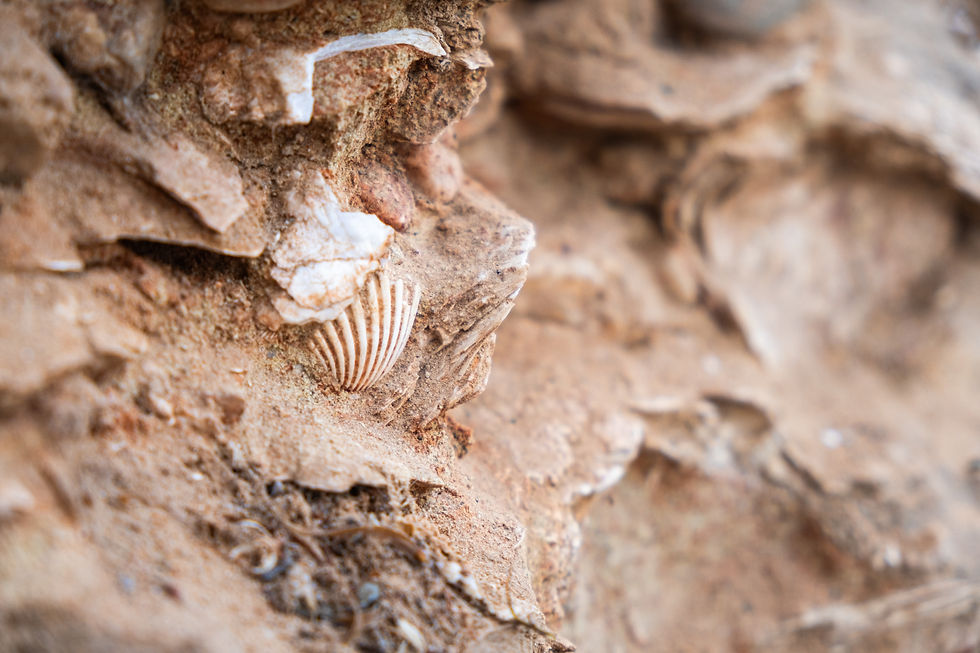
The limestone found throughout the Saint-Émilion area dates back to the Oligocene period, around 30 million years ago.
Much of it is known as "calcaire à astéries", a marine limestone composed of fossilised star-shaped organisms called asteries. These ancient marine deposits created a highly porous rock that still influences the vineyard today.
From a viticultural perspective, this type of limestone is particularly valuable due to its structure and chemical composition. Rich in calcium carbonate (CaCO₃), it contributes to a relatively high soil pH, which influences nutrient availability and microbial activity in the soil.
This geological foundation is one of the reasons the region has become internationally recognised for producing refined, balanced and long-lived Bordeaux wines.
Natural Water Regulation
One of limestone's greatest qualities is its ability to regulate water.
Its porous structure absorbs winter rainfall and gradually releases moisture back to the vines during the growing season. This buffering capacity helps maintain a stable water supply, avoiding both waterlogging and severe drought stress.
From a physiological standpoint, moderate water stress is essential for vine quality. It limits excessive vegetative growth, encourages smaller berry size, and promotes a higher skin-to-juice ratio, key factors in the concentration of tannins, anthocyanins and aromatic compounds in red wines.
At Château Latour Monplaisir, mature vines are able to develop deep root systems that penetrate fissures within the limestone, accessing water reserves several metres below the surface even during periods of drought.
Deep Roots, Soil Structure and Nutrient Dynamics
Vines naturally seek water where it is available. On limestone soils, roots often grow remarkably deep, sometimes extending several metres underground. This deep rooting is facilitated by the fractured structure of limestone, which allows roots to explore multiple soil horizons.
From a scientific perspective, this has several important consequences:
Improved mineral uptake: deeper roots access a wider range of nutrients, including calcium, magnesium and trace elements.
Cation exchange capacity (CEC): although limestone soils are not always rich in clay, the presence of calcium plays a key role in stabilising soil structure and facilitating nutrient exchange.
Soil microbiology: limestone soils often support diverse microbial communities, including mycorrhizal fungi that enhance nutrient absorption and improve vine resilience.
Root signalling and stress adaptation: deeper root systems allow vines to better regulate stomatal activity, maintaining photosynthesis even under moderate water stress.
These factors contribute to more balanced vine growth and more consistent grape ripening.
Preserving Freshness in a Warmer Climate
As temperatures continue to rise, preserving freshness has become one of the greatest challenges for winegrowers.
Limestone soils naturally help regulate vine water status and slow down the ripening process. By avoiding excessive water stress, vines maintain active photosynthesis for longer, allowing for a more gradual accumulation of sugars and phenolic compounds.
This slower ripening is crucial for achieving phenolic maturity, optimal development of tannins and colour, without excessive sugar levels.
While acidity is primarily influenced by climate and harvest timing, limestone-grown vines often produce grapes with better overall balance, combining ripeness with structural freshness.
Limestone and Bordeaux Red Wines
The combination of Merlot and Cabernet Sauvignon planted on limestone soils has long defined some of Bordeaux's finest red wines.
Merlot develops generous fruit, supple tannins and richness, while Cabernet Sauvignon contributes freshness, structure and ageing potential.
Alongside these classic varieties, Carménère, an ancient Bordeaux grape variety, also plays an interesting role in the region’s viticultural history. Once widely planted before the phylloxera crisis of the 19th century, Carménère nearly disappeared from Bordeaux but has since gained renewed interest. It brings distinctive aromatic complexity, with notes of spice, dark fruit and herbal nuances, as well as soft tannins and depth.
From a scientific standpoint, limestone soils enhance the expression of these varieties by:
promoting smaller berries with thicker skins
improving phenolic concentration (tannins and anthocyanins)
supporting balanced nitrogen availability, which influences fermentation dynamics
contributing to more precise aromatic profiles
When these varieties are grown on limestone, they often produce wines that are both powerful and remarkably precise.
Rather than feeling heavy, they maintain lift, tension and remarkable balance.
The Château Latour Monplaisir Terroir
At Château Latour Monplaisir, we consider our limestone soils to be one of our greatest assets.
Combined with sustainable vineyard practices, increasing biodiversity and careful canopy management, this terroir allows us to optimise vine balance and grape quality.
Practices such as controlled yields, soil cover management and minimal intervention help preserve soil structure and microbial life, reinforcing the natural advantages of our limestone terroir.
Our flagship cuvée, Astéria, is produced from a small parcel planted on these exceptional limestone soils. Extended barrel ageing adds complexity while preserving the purity of the fruit and the natural freshness that our terroir provides.
Our Lyra cuvée expresses another side of the estate, highlighting vibrant fruit, balance and drinkability while remaining true to the elegance that characterises limestone-grown Bordeaux wines.
A Terroir That Speaks Through the Wine
Great wine is never the result of a single factor. Climate, grape varieties, vineyard practices and winemaking all contribute to the final bottle.
Yet the soil remains the foundation of everything.
At Château Latour Monplaisir, our limestone terroir near Saint-Émilion gives our red wines their identity: depth without heaviness, freshness without austerity, and the balance that allows every vintage to express itself with precision.
It is this unique relationship between geology, vine physiology and human craftsmanship that continues to make limestone one of the world's most remarkable vineyard soils.


Comments